
Cognex Alternatives in 2026: An Honest Comparison for Production Lines
Cognex makes excellent vision systems — and expensive ones. Here is a frank look at the real alternatives: Keyence, SICK, Zebra, Halcon-based builds, DIY OpenCV, AI-native vendors and Robopipe.
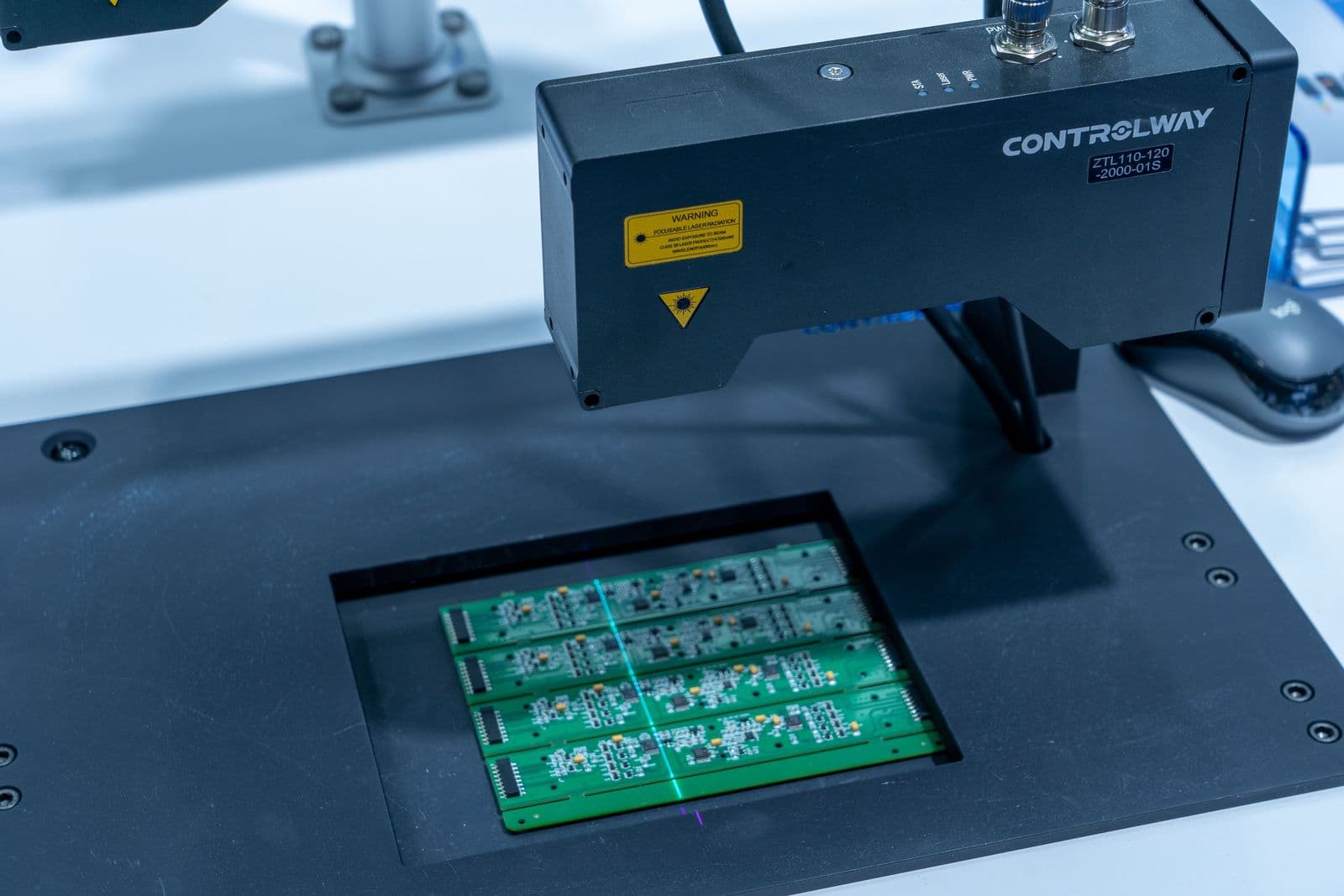
Cognex is the default answer in industrial machine vision, and mostly for good reasons. The In-Sight smart cameras are robust, the software toolset is mature, and there is an integrator in every EU country who has deployed them a hundred times. But "default" is not the same as "best for your line" — and a fully configured Cognex station often lands somewhere between €10,000 and €30,000 once you add lenses, lighting, licences and integration work. If you are inspecting products on a food, pharma or logistics line and that number makes your project stall, it is worth knowing what else exists. Here is an honest comparison — including where Cognex is still the right call.
Where Cognex genuinely wins
Before listing alternatives, let's be fair. You should probably stay with Cognex when:
- You need proven, validated performance in regulated environments — pharma serialization, automotive traceability — where the audit trail of a big-name vendor matters.
- Your application needs high-end optics or 3D: the In-Sight 9000 class systems and 3D profilers cover cases most challengers simply don't.
- You already have in-house Cognex expertise and spare units on the shelf. Switching ecosystems has a real cost.
- You run very high line speeds (thousands of parts per minute) where every millisecond of processing latency is engineered out.
The pain points that push people to look elsewhere are equally real: per-unit hardware cost, per-seat and per-feature software licensing, dependency on integrators for every change, and deep-learning tools (ViDi) that add another licence layer on top.
Keyence: the closest like-for-like rival
Keyence's CV-X and vision sensor lines are the most direct substitute. The controller-based CV-X systems are known for a genuinely friendly setup UI — many plants configure inspections without an integrator. Keyence sells direct with an aggressive sales force, support is bundled into the hardware price, and entry pricing tends to come in slightly below Cognex for comparable mid-range tasks.
The trade-offs: pricing is quote-only and famously opaque, the ecosystem is just as closed as Cognex's, and a multi-camera CV-X installation can easily reach €15,000–€50,000 per line. You are swapping one premium lock-in for another — sometimes with better ergonomics, rarely with lower total cost.
SICK, Omron, Datalogic, Banner: the automation-house options
If your plant is already standardized on one automation vendor, their vision offering deserves a look:
- SICK (Germany) — strong 2D/3D cameras and the Inspector line; good fit where SICK sensors and safety gear are already on the line.
- Omron (with the former Microscan portfolio) — solid vision controllers with tight PLC integration for Omron-based lines.
- Datalogic (Italy) — competitive smart cameras, particularly strong in logistics and code reading.
- Banner Engineering — simpler, cheaper vision sensors for basic presence/absence checks.
These are sensible, conservative choices for classic rule-based inspection. Their weakness is the same as the incumbents': deep-learning tooling is younger, and you still pay per device plus integration.
Software-first: Zebra Aurora, MVTec Halcon and the build-it-yourself route
A different philosophy is to buy software and pair it with industrial cameras from Basler, IDS or FLIR:
- MVTec Halcon and Merlic (Munich) — arguably the deepest machine-vision library on the market, with 2D, 3D, OCR and deep learning. Halcon is a developer tool; Merlic is the no-code sibling. You need someone who can program, but you escape smart-camera pricing.
- Zebra Aurora Vision (the former Adaptive Vision, developed in Poland) — a graphical vision environment now paired with Zebra's smart cameras after the Matrox acquisition.
- OpenCV / open source — free and infinitely flexible, but you own everything: enclosure design, lighting, PLC integration, model training, and long-term maintenance. Realistic for teams with a dedicated vision engineer; risky as a side project.
The honest math: software-first setups can cut hardware cost dramatically, but engineering time is where the budget goes instead. A one-off internal build that works on day one and is unmaintainable in year three is a common failure mode.
AI-native newcomers
A wave of younger companies attacks Cognex from the deep-learning side — training models from example images instead of hand-tuned rules. Vendors like Overview AI, Landing AI and Averroes pitch faster setup, no-code training and transparent pricing, often claiming large savings against Keyence- or Cognex-class quotes. The approach fits cosmetic and surface defects, natural products and anything too variable for classic thresholds.
What to verify before buying: EU presence and support, on-prem vs. cloud processing (relevant for GDPR and for plants with locked-down networks), IP-rated hardware for washdown areas, and what happens to your trained models if you leave.
Robopipe: vision as a subscription
We should declare our bias here — this is the Robopipe blog — but the model is worth explaining because it differs structurally from everything above. Instead of a capital purchase, a camera-based inspection system like Robopipe is delivered as a subscription: the AI camera, the edge controller (AI PLC), the model training and the ongoing support are one monthly fee.
Why that matters in practice:
- No capex approval cycle. A €20,000 vision project needs a business case and a budget round; a monthly tariff fits an operating budget and can start as a pilot on one line.
- The vendor owns the accuracy problem. When products, packaging or lighting change, retraining is part of the service — not a new integrator quote.
- Deep learning by default. The system is built for variable products (food, natural materials, flexible packaging) where rule-based tools struggle.
Where this model is not the right fit: sub-millisecond high-speed sorting, validated pharma processes requiring formally qualified equipment, or plants that strictly prefer owning assets outright. Cognex, Keyence or a Halcon build serve those cases better.
There is no universally best vision system — match the tool to the problem: incumbents for validated high-speed lines, software-first for strong internal teams, AI-native and subscription models for variable products and fast, low-risk pilots.
A practical way to decide
- Write down the defect list first. Rule-based tools handle geometry, presence/absence and codes well; variable surface defects and natural products favour deep learning.
- Count total cost over three years, not the camera price: licences, integration days, retraining after every product change, and internal engineering time.
- Demand a trial on your real products — every vendor's demo parts behave perfectly. Ship them a box of your worst NOK pieces and judge on those.
- Check who makes changes after go-live. If every new SKU means calling an integrator, factor that into the honest cost.
Cognex remains a safe, capable choice — but in 2026 it is one option among several credible ones, not the only serious game in town. The right comparison isn't brand versus brand; it's your defect list, your line speed and your team's capacity versus each vendor's actual delivery model.