
Cut reject rates without slowing production
Most plants accept a trade-off between inspection depth and throughput. With deep-learning inspection running at takt, you don't have to.
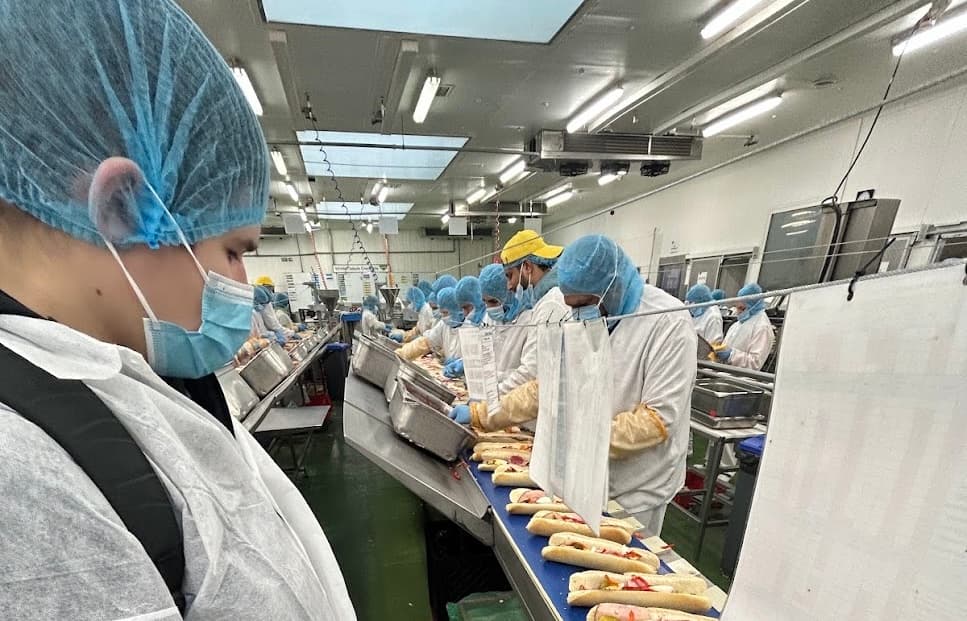
Every quality manager knows the math: check more, ship slower. Sampling every tenth piece keeps production moving but lets defects through in batches; checking every piece by hand means adding people or losing takt. That trade-off is so ingrained that most plants stopped questioning it.
A camera doesn't make that trade. At 3,600 pieces per hour, a deep-learning model classifies each product in under 50 milliseconds — faster than the belt moves one product past the lens. Inspection depth stops being a function of headcount.
Where the rejects actually come from
In the food plants we work with, the biggest source of rejects isn't a broken machine — it's drift. A dosing head slowly clogging, a new operator placing toppings differently, a supplier changing lettuce cut. Each drifts for hours before a sample check catches it, and by then you're binning a shift's worth of product.
Piece-by-piece inspection turns drift into a signal. When the pass rate dips from 99% to 96% over twenty minutes, the floor display shows it while the cause is still fixable — a nozzle to clear, not a batch to scrap.
The first-month payback
Crocodille added Robopipe to three sandwich lines and cut their reject rate by roughly a third in the first month. Not because the model caught defects humans couldn't — but because it caught them immediately, every time, and told the team where to look.
Rule of thumb: if your operation scraps more than 1% of output and runs faster than one piece per two seconds, piece-level inspection pays for itself within a quarter.
Keeping production at speed
The inspection point adds zero mechanical steps: the camera mounts above the existing belt and the controller signals your existing rejector or downstream PLC. Nothing slows down — the only thing that changes is that every piece now has a verdict, and your team sees quality as it happens instead of reading about it tomorrow.