What camera quality inspection is
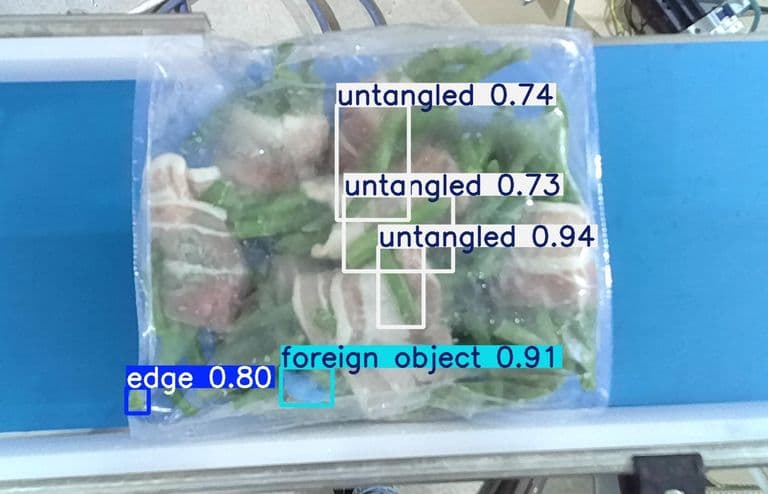
Camera quality inspection means a camera and an inference unit judge each product on the line instead of a person. The camera captures every piece. A model checks whether the piece matches the reference. The verdict then goes to the operator display, to the reject mechanism or to your systems.
Spot-checking every tenth piece keeps the line at speed, but defects slip through by the batch. Checking every piece by hand means more people on the line. A camera does not have to make that trade-off. At 3,600 pieces per hour it judges each product within 50 milliseconds.
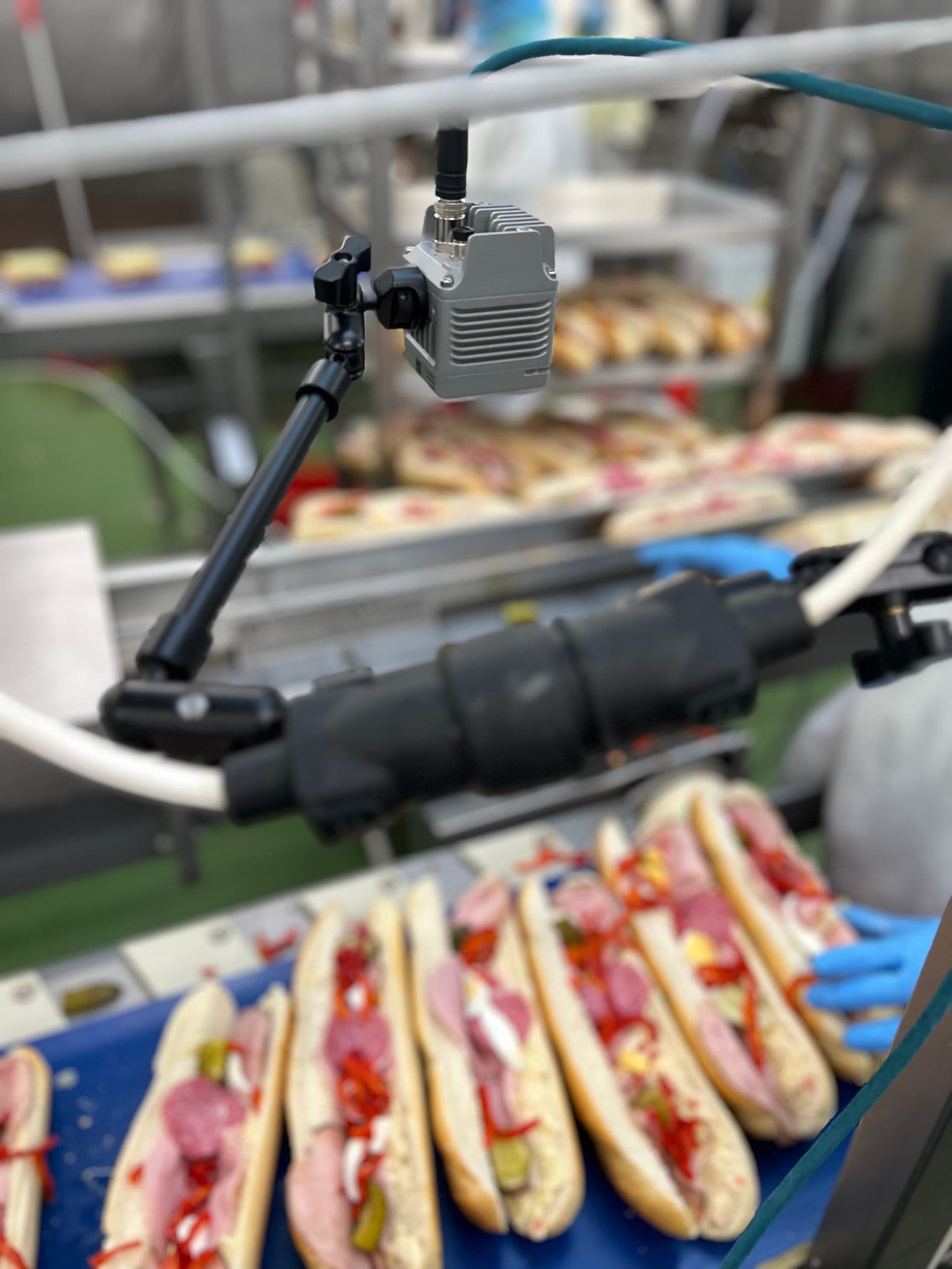
Hardware built for the factory floor
- IP67 camera. It is fully sealed, so it handles steam, pressure washing, dust and freezer cold. You wash it down with the rest of the floor during sanitation.
- Images in line with the line. The 12 MP camera captures on an encoder pulse, a light barrier or a fixed frame rate.
- Inference at the line. The AI PLC controller decides on every piece. It has analogue and digital I/O, RS485/RS232, Modbus and EtherCAT over Ethernet.
- Connected to your machines. The verdict fires your existing reject mechanism or signal beacon. The line does not slow down and gets no extra mechanical step.
How Robopipe does it
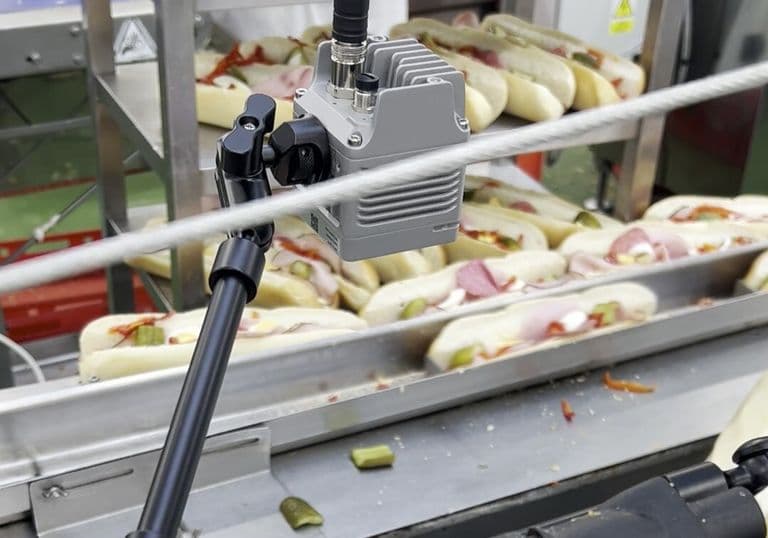
We mount the camera over your existing belt and commission it on site, also in wet, cold or dusty operations. You add new products yourself. Capture a few good pieces, confirm what a good piece looks like and inspection starts. You do not need data scientists.
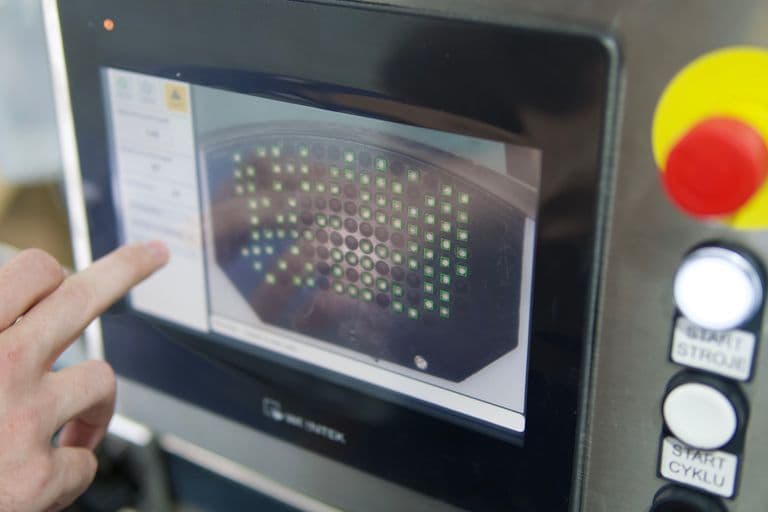
Operators see how today's batch runs on the floor display: piece counts, OK share, top defects, downtime and takt. When the pass rate starts to fall, the team sees it while the cause can still be fixed. Managers follow trends in the analytics portal.
The camera and the controller come with every paid plan as a rental. Start with one camera and add more whenever you want.
The camera sees, the model decides
A deep-learning model decides what is in the image. The home page shows how AI quality inspection works from image to verdict. For a general introduction to machine vision and computer vision, see the guide to vision systems.

 Food processing