
Camera quality control for small-batch and custom production
Camera inspection does not need a conveyor belt or large series. At an inspection station, assembly bench, or dispatch table, the camera checks every part the operator places under it and saves a photo for audit.
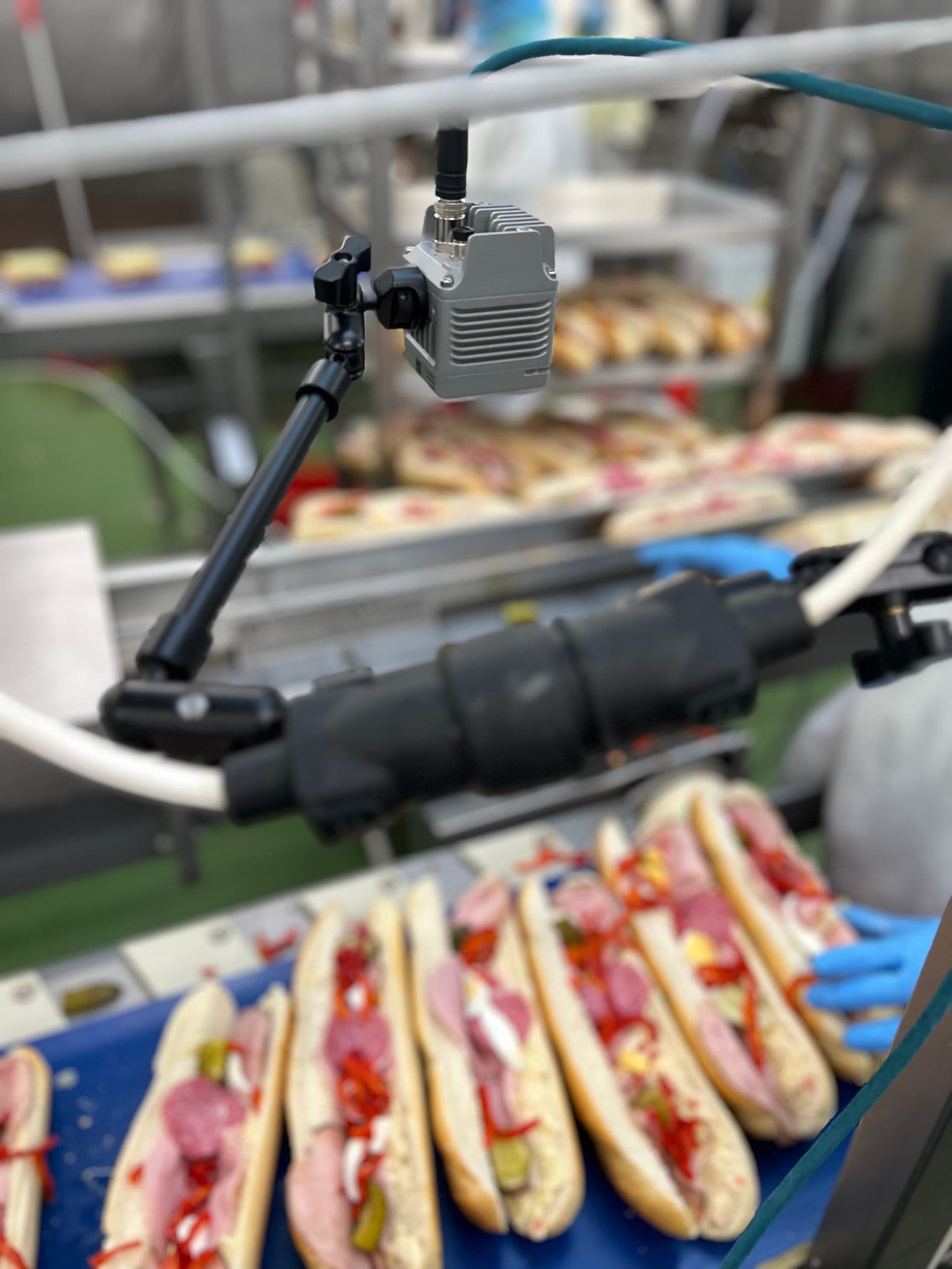
Inspection at a workbench instead of a conveyor
In custom manufacturing and small-batch production, parts do not move on a conveyor belt. An assembler or inspector builds, machines, or prepares each part for dispatch at a bench. Above this workstation, you mount a Robopipe industrial camera with 12 MP resolution.
The operator places the part under the camera, and the camera detects the new part and starts the check itself. The operator does not press anything, and the workstation does not need a sensor. For small-batch production, Robopipe uses an online model that is smarter than the model on a control unit and requires an internet connection. Checking one part takes up to 5 seconds. At a manual workstation where the operator places the part, this does not matter. The operator sees the result on a tablet or shop-floor screen. The camera quality inspection page describes the camera hardware.
What one benchtop camera checks
One camera runs several checks on a stationary part at once:
- Assembly completeness. Every component sits in place, nothing is missing or extra, and no part sits in the wrong spot or replaces another.
- Surface and shape defects. The camera flags visible surface or shape deviations against an approved reference, as described under defect detection.
- Labels and markings. The model verifies label presence and position and checks batch code legibility.
- Outgoing inspection and dispatch. Before dispatch, the camera verifies order contents and saves a photo of every part as proof in case of a claim.
Where AI vision fits and where it does not
Nobody programmes the camera with rules such as "a scratch longer than 2 mm is a defect". You show the online model one photo of a good part or another reference, such as CAD data. From that reference, the model learns what is acceptable and what is not.
The limit lies elsewhere. The camera checks only what is visible in the image. If you need to measure dimensions in microns, that is a job for a dedicated measuring tool.
The camera pays off where identical parts, sub-assemblies, or kitted sets return in small batches, as well as on single-piece orders. When a new product arrives, you prepare the check yourself from one photo or another reference. You do not need an external integrator. You can start with one station on a monthly plan, with details on camera quality inspection rental.
When a part does not repeat
A small batch or a single-piece order does not mean the camera has nothing to do. It checks the part itself against one photo of a good piece or against CAD data. Products differ between orders, yet labels, batch codes, fasteners, or packaging stay the same. You teach the camera those items once and it checks them on everything that passes under it. On a one-off part, photo documentation also helps. The camera saves an image of every shipped order, so you hold proof of part condition if a customer raises a claim.
Frequently asked questions about small-batch inspection
Does an AI camera make sense if we only produce small batches?
Yes, inspection makes sense for both small batches and single-piece orders. The online model needs only one photo of a good part or another reference, such as CAD data. The number of stored products in the system is not limited. On one-off orders, the camera also checks labels or packaging and saves an image of the part for potential claims.
Do we need a programmer to add a new part?
No, an operator or technician adds a new part directly. The online model needs only one photo of a good part or another reference, such as CAD data. Nobody needs to write code or prepare a batch of sample parts.
Does workshop inspection work without an internet connection?
No, inspection at a manual workstation requires an internet connection because the model for small-batch production runs online. The image of every inspected part serves as proof for audits and claim handling.
Can the camera measure part dimensions to hundredths of a millimetre?
No, a traditional measuring system serves 3D measurement at micron accuracy better. The Robopipe industrial camera with 12 MP resolution assesses visible surface defects, shape deviations, assembly completeness, or labels in the image. It fits visual and outgoing inspection where you otherwise rely on an inspector's eyes.
How much does a single inspection station cost?
You rent the hardware and software for one flat monthly fee per camera with no upfront hardware purchase or integration charge. The Standard plan with a camera costs €390 excl. VAT per month. The Pro plan adds the AI PLC unit, on-site installation, operator training, and unlimited model trainings for €590 excl. VAT per month.
Send us an enquiry
Test camera inspection on your own parts.
Book a 30-minute demo. We will review your parts and tell you honestly what a benchtop camera can check and where it will not fit.